As the Canadian landscape finally emerges from the long, white grip of winter, homeowners from the Maritimes to the Rockies are breathing a sigh of relief. April 2026 has arrived, and with it comes the familiar ritual of the spring cleanup. You might be checking your garden beds for the first signs of perennials or glancing up at your roofing to ensure the heavy snow loads didn’t loosen any shingles. However, there is a silent battle happening on the vertical surfaces of your property that requires your immediate attention. While most people associate “ice dams” with gutters and eaves, a much more insidious version—the vertical ice dam—is currently threatening your siding.
After months of fluctuating temperatures, the transition from frozen nights to temperate days creates a “thaw-and-trap” cycle. This phenomenon isn’t just a matter of aesthetics. It is a structural challenge that can compromise the very integrity of your home. Understanding why trapped moisture is the “silent killer” of Canadian exteriors is the first step in ensuring your home remains a dry, healthy sanctuary for the rest of the year.
The Phenomenon of the “Vertical Ice Dam”
The Canadian winter of 2025-2026 saw many deep freezes. However, the real damage came from erratic temperature swings. Snow often piles up against the side of a house or sits on window ledges. When this happens, it undergoes a daily cycle of melting and refreezing. This meltwater doesn’t always run off. Instead, it finds its way into the small gaps and tracks of your exterior cladding.
At night, this water hits the cooler air behind the panels and freezes instantly. This ice is trapped in a confined space, unlike the ice on your driveway. This creates a “vertical ice dam.” As more water seeps in and freezes, the ice block grows. It exerts an outward pressure that your home was never designed to handle. This is why a professional spring siding inspection is vital. Without a close look, you may miss subtle signs of trouble. The “thaw” often leaves behind a legacy of hidden damage. These issues will only worsen as the humid Canadian spring progresses.
The Physics of the “Pop”: How Ice Destroys Curb Appeal
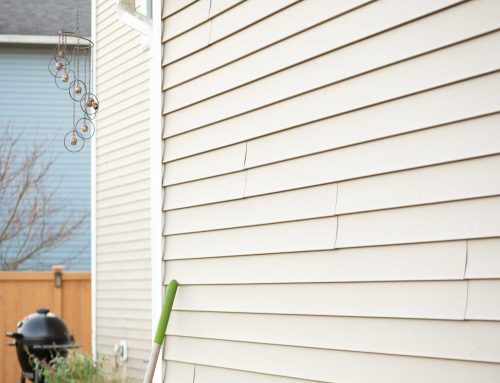
The science behind the damage is simple but devastating: water expands by approximately 9% when it turns into ice. In the context of a Canadian home, that expansion is a brute force. Most vinyl and composite panels are designed to hang loosely to allow for thermal expansion, but they are held in place by a locking hem. When ice forms behind these panels, it pushes the material away from the wall with enough force to “pop” the siding out of its tracks.
This “popping” effect is often loud enough to be heard inside the house on a cold night, but the visual evidence can be deceptive. In some cases, the siding might look like it has snapped back into place once the ice melts. However, once a panel has been physically forced out of its original position, the mechanical lock is often weakened or warped. This creates a permanent gap. Even if you think you can keep your siding looking fresh in any season with a simple wash, you cannot “clean away” structural warping. A panel that has popped once is significantly more likely to fail during a summer windstorm or allow driving rain to penetrate the wall cavity in the coming months.
The Silent Killer: Trapped Moisture and Substrate Rot
While the physical popping of a panel is frustrating, the real danger is what happens behind the visible surface. Siding is designed to be a “water-shedding” system, not a “water-tight” one. It relies on a secondary defense called the weather-resistive barrier (WRB), or house wrap, and the underlying sheathing—usually Oriented Strand Board (OSB) or plywood.
When moisture becomes trapped in the “shadow” of the siding, it creates a micro-climate of high humidity. Because there is very little airflow between the siding and the house wrap, this water has nowhere to go. It cannot evaporate. Over time, this standing water begins to saturate the house wrap and eventually the wood sheathing. By the time the calendar turns to May and temperatures consistently reach the 15 degrees Celsius mark, this trapped moisture becomes a breeding ground for mould and wood-rotting fungi.
This is the “silent rot” that destroys home values. It starts as a small damp spot and can quickly turn into structural failure of the rim joist or the wall studs. This is why it is so critical to ensure that your siding is installed correctly, with proper flashing and drainage planes. A minor installation error five years ago can manifest as a catastrophic rot problem during a particularly volatile spring thaw, like the one we are experiencing in 2026.
Identifying the “Symptoms” of Trapped Moisture
Knowing how to spot the signs of trapped moisture can save you tens of thousands of dollars in structural repairs. During your spring siding inspection, you should look for the following “red flag” symptoms:
- The “Tap Test”: Walk the perimeter of your home and gently tap on the siding panels with your knuckles. You should hear a clear, hollow “click” as the panel vibrates against the wall. If you hear a dull, heavy “thud,” it is a strong indicator that the OSB sheathing behind the panel is water-logged and soft.
- Biological Staining: Look for green algae, black mould spots, or dark “weeping” stains at the seams of your siding. This isn’t just surface dirt. It’s a sign that organic matter is growing in the moisture-rich environment behind the plastic or fibre cement.
- The Drip Factor: Observe your home a day or two after a rainstorm. If you see water still dripping from the bottom “starter strip” or the weep holes, your wall system is holding onto water rather than shedding it.
- Oil-Canning: Wavy or buckled siding (often called “oil-canning”) is frequently caused by the sub-wall expanding from moisture, pushing the siding outward in irregular patterns.
April Action Plan: To Repair or Replace?
April is the “month of decision” for Canadian homeowners. Catching these issues now allows for targeted, affordable repairs. If only a few panels have popped or the moisture is localized around a poorly flashed window, a professional can often perform a “surgical” repair to restore the barrier.
However, if your inspection reveals widespread “soft spots” or if your home is still clad in original materials that have reached the end of their 20-year lifespan, it may be a sign that you need new siding for your home. Modern 2026 siding systems are far superior to those installed in the early 2000s. Today’s high-performance installs include “rainscreen” technology—a small gap behind the siding that allows for vertical airflow. This ensures that even if moisture does get behind the panel during a freeze-thaw cycle, it can evaporate quickly, preventing rot before it starts.
Furthermore, replacing your siding in the spring allows you to upgrade your home’s “thermal envelope.” Adding an inch of continuous exterior insulation during a siding project can reduce your heating and cooling costs by up to 20%, a vital consideration as Canadian energy prices continue to rise.
Protecting Your Home’s “Skin”
Your home’s exterior is much more than a colour choice. It is a high-performance shield built to protect your family from the extremes of the Canadian climate. The “Great Thaw” of April 2026 has put that shield to the test. By performing a thorough spring siding inspection, you do more than just maintain curb appeal. You are performing a vital health check on your home’s skeleton.
Don’t let the invisible threat of trapped moisture turn into a summer of mould and structural decay. You might just need to snap a few panels back into place. Or, you may realize you need a new siding for your home to meet modern efficiency standards. Regardless, the time to act is now. A dry home is a healthy home. In Canada, that starts with ensuring winter’s ice doesn’t become spring’s rot. Take advantage of the pleasant April weather. Walk your perimeter, listen to your walls, and ensure your sanctuary is ready for the beautiful months ahead.